
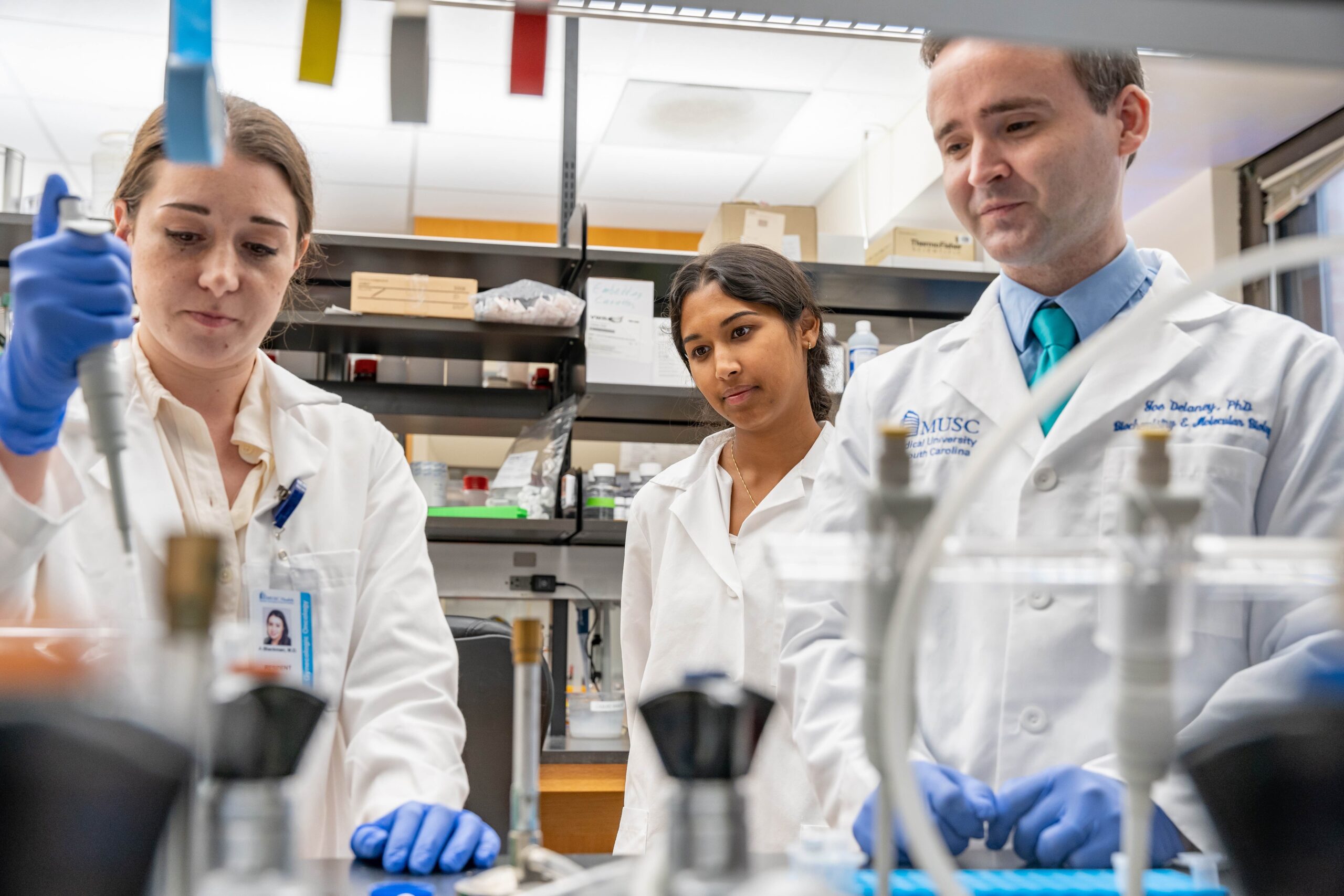
Connecting molecular science to clinical research
The Alliance Translational Research Program (TRP) advances molecularly driven oncology by integrating translational science, biomarkers and biospecimens into Alliance clinical trials. The program helps ensure that discoveries about the biology of cancer can be studied alongside clinical outcomes, strengthening the scientific foundation for more precise approaches to cancer prevention, diagnosis and treatment.
The TRP provides the scientific expertise, resources and infrastructure needed to develop and execute integrated, integral and correlative biomarker research across Alliance trials. The Alliance translational research leaders work closely with disease and modality committees to identify meaningful translational endpoints and ensure they are incorporated into study design and execution.
Building connections across the research community
Translational research depends on collaboration. The TRP brings together Alliance investigators and researchers from NCI-designated cancer centers, Specialized Programs of Research Excellence (SPOREs), community hospitals, academic institutions, and individual research laboratories.
Through these partnerships, the program supports molecular characterization, biomarker development, companion diagnostic research, and other approaches that help researchers better understand why treatments work, why they fail, and how therapy can be better tailored to individual patients.
The TRP also serves as a gateway for investigators beyond the Alliance who seek to leverage NCTN biospecimen resources, molecular expertise and other translational research infrastructure to advance additional research studies.
Supporting biospecimens and translational resources
The TRP oversees the Alliance Integrated Biorepositories, a coordinated network with locations at The Ohio State University in Columbus, Washington University in St. Louis, Mayo Clinic in Rochester, Minn., and Brigham and Women’s Hospital in Boston. These resources support the acquisition, storage, tracking and distribution of biospecimens collected through Alliance clinical trials.
The program also manages a network of molecular reference laboratories and specialty core resources that provide biospecimen, molecular and image analysis services required for Alliance research protocols. The TRP’s Biorepository Management System (BioMS) provides an integrated platform for real-time biospecimen query and tracking across the Alliance and the NCI National Clinical Trials Network (NCTN). Together, these resources enable investigators to access high-quality biospecimens and specialized laboratory services necessary to advance translational research.
The TRP includes four scientific committees that provide specialized expertise and operational support:
- Biorepository: Oversees strategies and resources for the collection, management and use of biospecimens in Alliance research.
- Pathology and laboratory medicine: Provides expertise in pathology, laboratory methods and biomarker development to support clinical and translational research.
- Pharmacogenomics and population pharmacology: Studies how genetic and pharmacologic factors influence treatment response, toxicity and outcomes.
- Translational bioinformatics: Applies computational and data-driven approaches to integrate molecular, genomic and clinical information to advance translational discovery.
A TRP Executive Committee provides program oversight, while a TRP Advisory Board offers external scientific guidance and perspective.
Advancing precision oncology
As cancer research becomes increasingly molecularly driven, the TRP plays an essential role in ensuring that Alliance clinical trials are equipped to answer increasingly complex biological questions. By integrating translational endpoints, biospecimen resources, molecular expertise and collaborative partnerships into clinical research, the program helps accelerate the development and validation of biomarkers and precision oncology approaches that can ultimately improve patient care.
Principal Investigator and Director
Alliance Translational Research Program
W. Fraser Symmans, MB, ChB
Winterhof Family Chair, Professor of Pathology and Translational Molecular Pathology
University of Texas MD Anderson Cancer Center